Instituto Fronteiras: mediating REDD+ and climate finance in the Upper Juruá
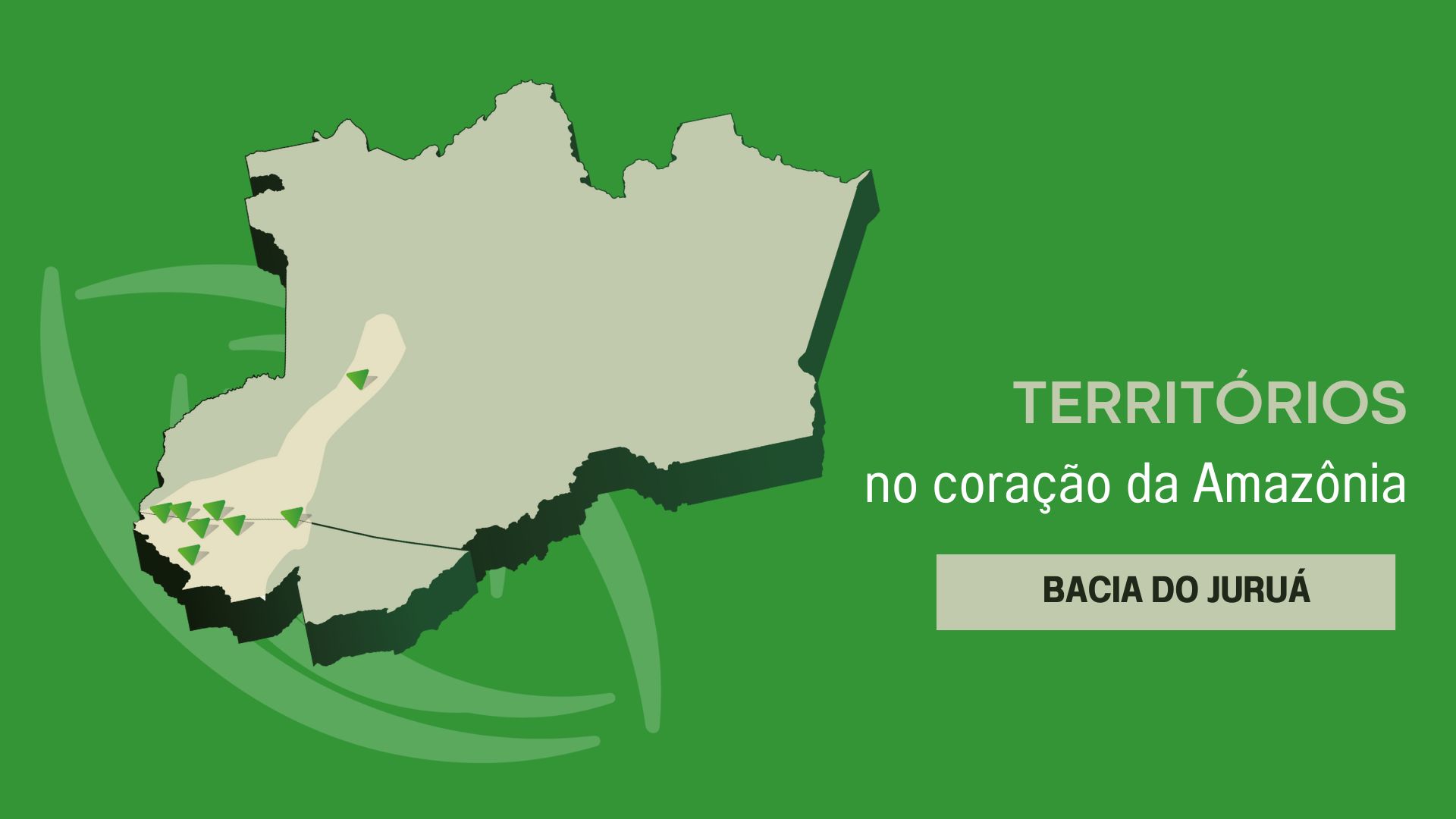
In the far west of the Brazilian Amazon, in the Upper Juruá basin, Instituto Fronteiras works on the frontline of forest protection and climate justice. Based in Cruzeiro do Sul (Acre), the organisation supports Indigenous Peoples and Traditional Communities, women and youth to defend their territories, regenerate ecosystems and build fair, forest-based economies. Since 2019, Fronteiras has helped protect around 117,000 hectares of forest, supported 28 territories and directly benefited more than 800 people.
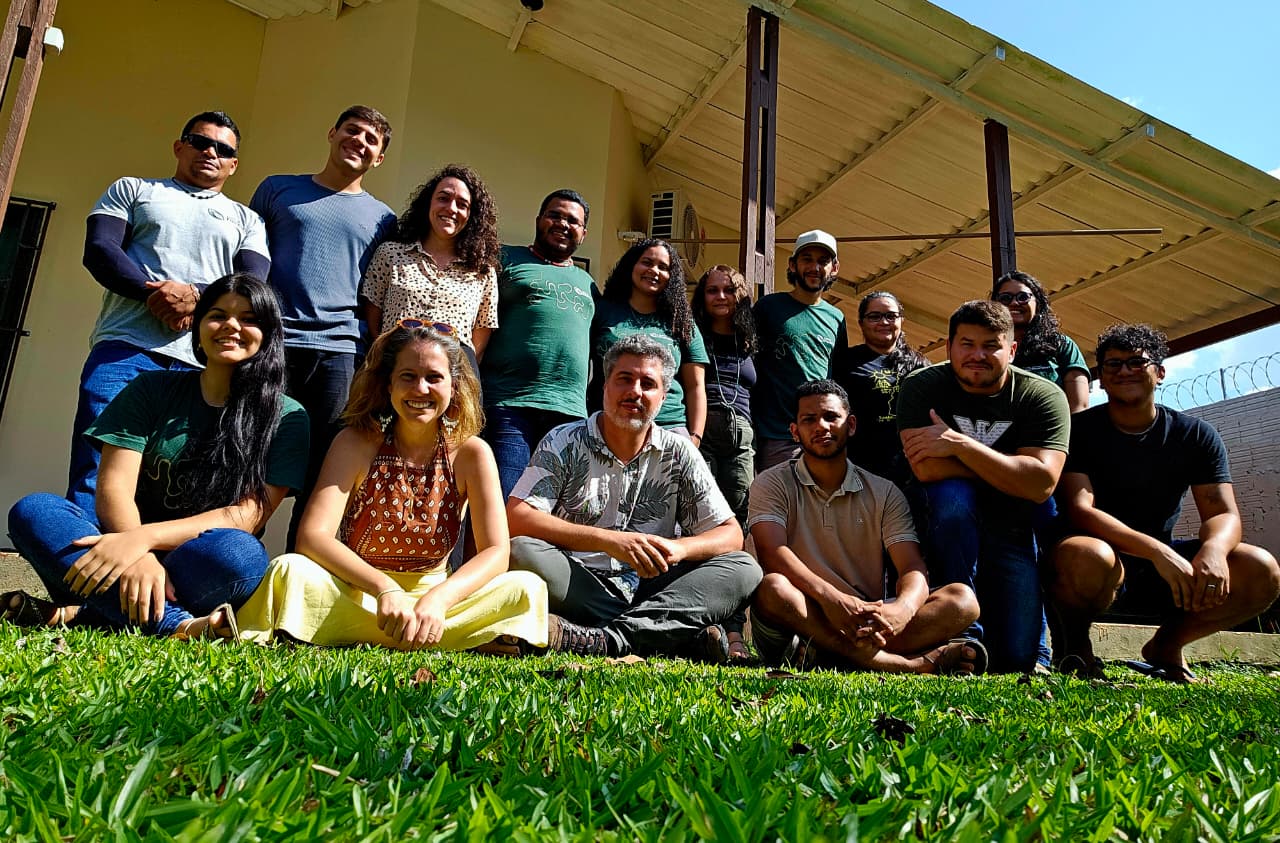
Fronteiras was created by local researchers and community leaders who understood that no single institution can face the social and environmental crises of the Amazon alone. The organisation works through networks – with associations, social movements, universities, NGOs, foundations, companies and governments – always starting from the priorities of forest peoples. Its focus is what it calls territorial mediation: creating institutional arrangements so that climate and conservation instruments, especially Payments for Ecosystem Services (PES) and REDD+, operate in favour of communities’ rights rather than reproducing old inequalities.
Making REDD+ visible
The starting point for Fronteiras’ Territorial Mediation Programme is a clear diagnosis: many PES and carbon projects fail because of fragile governance, information asymmetries and unbalanced negotiations that favour the financially stronger actor. In the Upper Juruá, communities began to hear about REDD+ and carbon credits in meetings and contracts, often without clear information on risks, benefits or long-term implications for their territories.
With support from ORFL, Instituto Fronteiras transformed this problem into an opportunity for transparency and community empowerment. Between 2024 and 2025, the team undertook a pioneering effort to map and monitor voluntary REDD+ projects in Acre, asking a basic question: how many projects are operating, where are they, and what do we really know about them?
The research involved screening more than 2,000 documents from registries and project files and reading over 300 technical reports in depth. From this work, the team identified 21 REDD+ projects connected to Acre, covering about 1.12 million hectares. For each one, Fronteiras compiled information that is rarely available in one place: who is behind the project, which territories are included, what methodologies are used, how many credits have been issued, what safeguards are promised and how benefit-sharing is supposed to work.
A public REDD+ Observatory for Acre
To make this information accessible, Fronteiras partnered with the Geoprocessing Laboratory for the Environment (LabGAMA) at the Federal University of Acre (UFAC – Campus Floresta). Together they georeferenced the projects and created an online REDD+ Observatory for Acre, a public platform where anyone can explore these 21 projects on an interactive map.
The Observatory consolidates indicators on deforestation, land tenure, overlaps with Indigenous Lands and Protected Areas, co-benefits, safeguards and benefit-sharing mechanisms. It turns highly technical and dispersed information into an intuitive interface that communities, researchers and public officials can actually use.
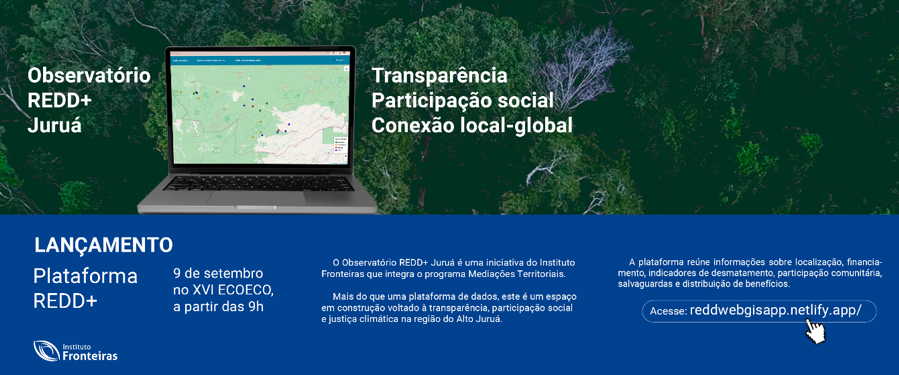
More than a data portal, the Observatory is a political tool. It allows communities to check whether a project’s mapped area overlaps their territory, identify gaps in transparency and ask concrete questions in negotiations. It also gives governments and oversight bodies a clearer picture of how voluntary carbon projects are expanding and where governance standards are falling short.
The platform was publicly launched during the XVI Meeting of the Brazilian Society for Ecological Economics (EcoEco), held in September 2025 in Cruzeiro do Sul and co-organised by Instituto Fronteiras and UFAC. The event marked the Observatory not just as a technological achievement, but as a collective commitment to climate justice in the Juruá basin.
Building literacy and forums around climate finance
Fronteiras’ work with ORFL goes far beyond building a digital platform. Using the Observatory and its underlying database as a starting point, the organisation has organised workshops and dialogues on REDD+, PES, safeguards and benefit-sharing for leaders from extractive reserves, Indigenous organisations, women’s groups, youth collectives and public managers.
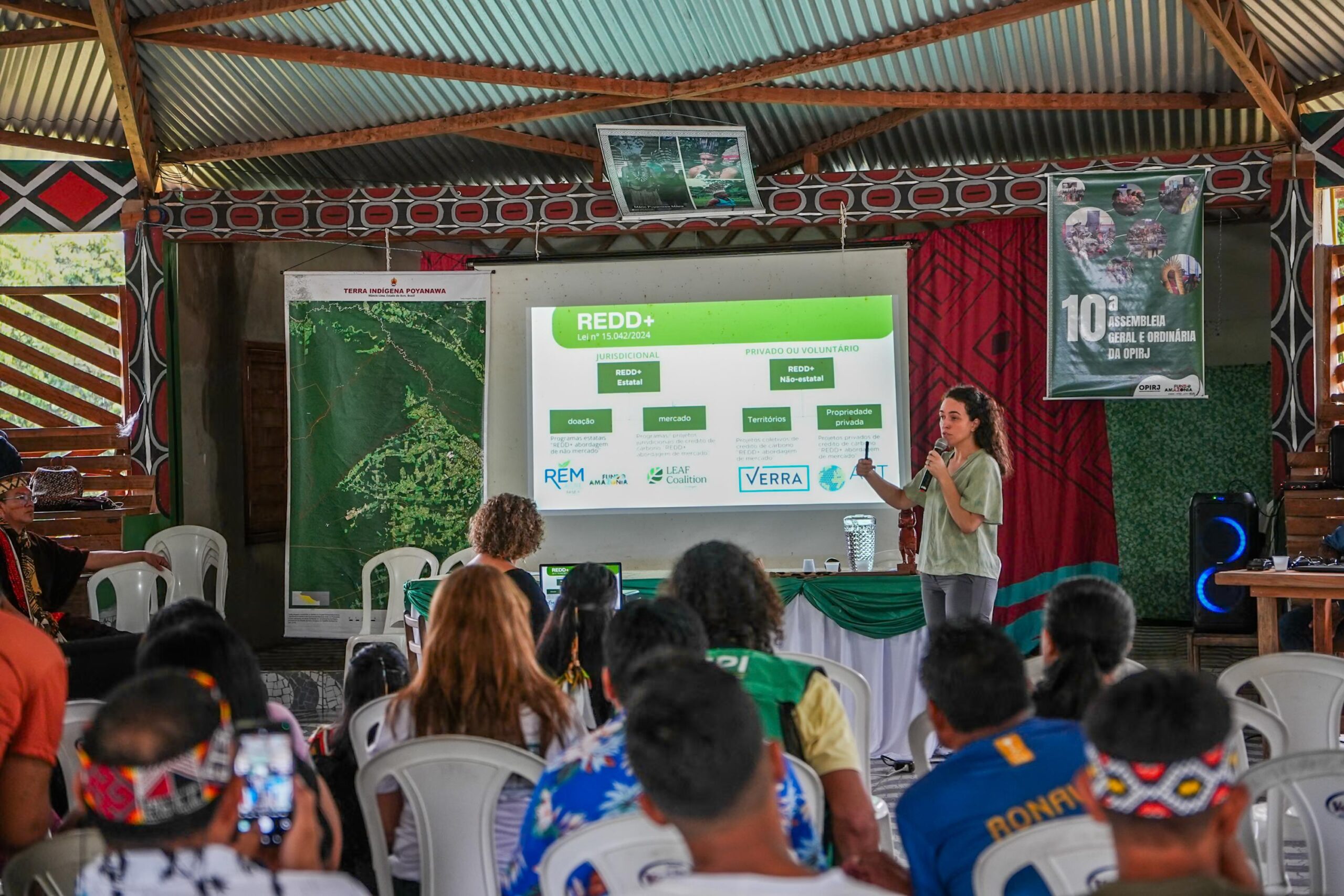
These climate finance literacy spaces translate complex concepts into concrete territorial questions: Who owns the land? Who signs the contracts? How are communities consulted? How are benefits shared? What happens if deforestation increases? The same methodology has already been used to support quilombola communities in Tocantins, showing the potential to replicate the approach in other regions of the Brazilian Amazon.
To sustain this process, Fronteiras also invests in knowledge production and open tools. Through its website and online library, the institute shares a didactic booklet on REDD+ and Brazil’s emerging carbon market, an article on environmental justice in offset projects and a policy brief on strengthening public governance and safeguards in jurisdictional REDD+. Together with the REDD+ Observatory, these materials help communities, journalists, researchers and policymakers navigate a fast-changing arena.
From EcoEco to COP30
A central milestone for the ORFL-supported project was EcoEco 2025 in Cruzeiro do Sul. The conference brought together researchers, Indigenous and traditional communities, public officials and civil-society organisations to discuss ecological economics, bioeconomy and climate finance with the Juruá basin as a living case study. Fronteiras played a key role in ensuring that leaders from local territories were not only present but at the centre of key debates and roundtables.
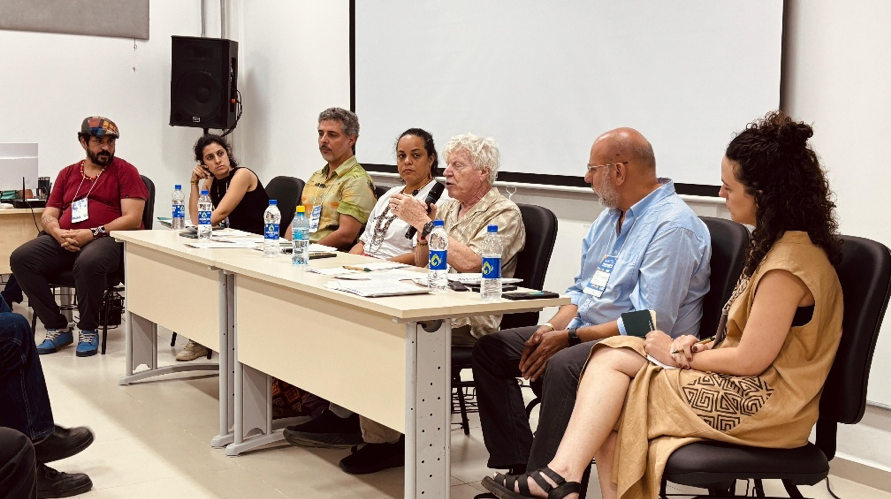
During the meeting, a climate finance letter was launched by researchers from Brazilian academic networks, with strong input from Fronteiras. The document highlights critical gaps in climate finance architecture – from the predominance of loans over grants to the barriers frontline communities face in accessing funds – and calls for fair, direct and transparent funding mechanisms. The experiences of the Upper Juruá, including those documented by the REDD+ Observatory, helped ground these demands in real territorial dynamics rather than abstract theory.
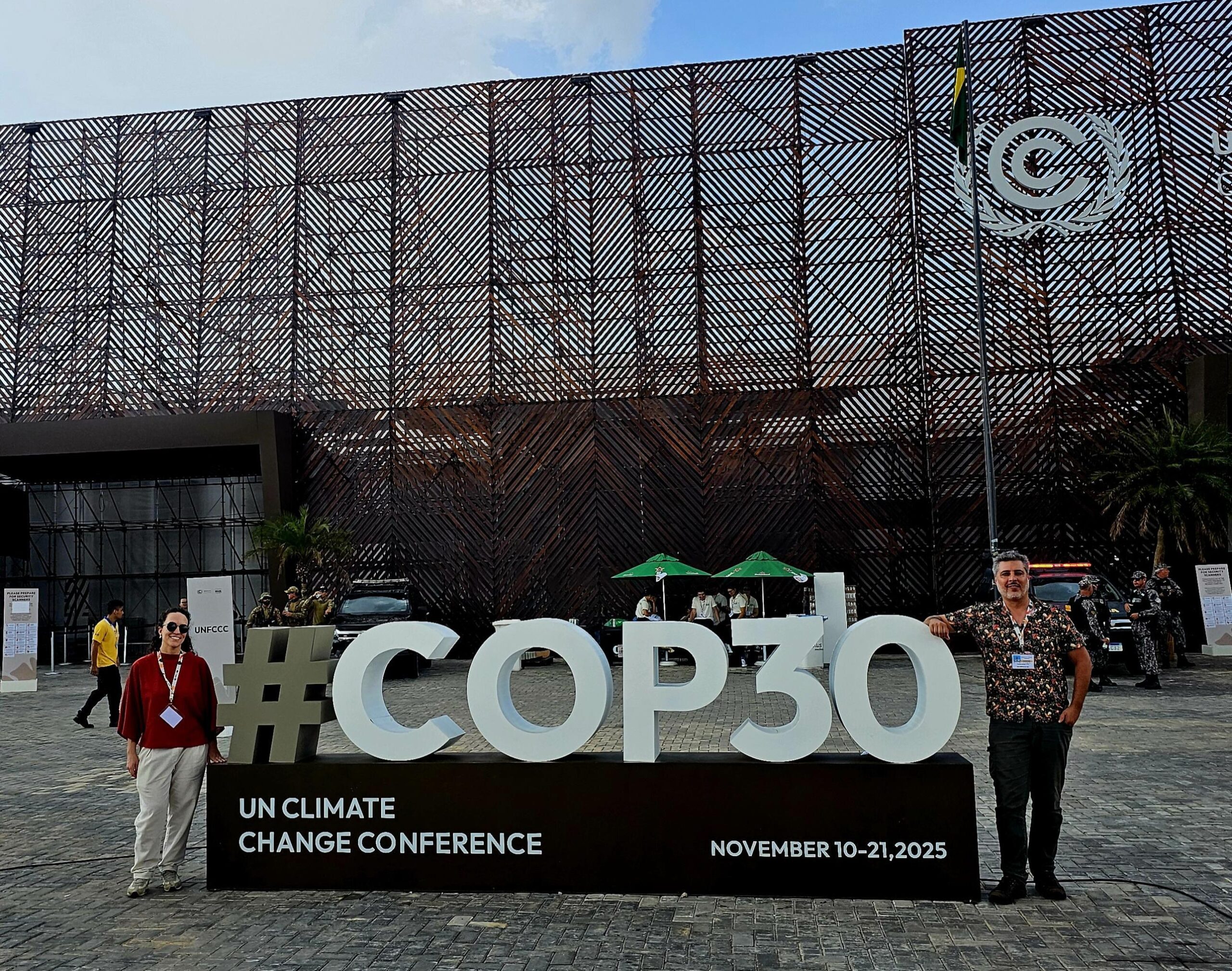
The project also feeds directly into preparations for COP30, which will be hosted in Belém. Instituto Fronteiras is working to ensure that discussions on carbon markets and climate finance in Belém reflect what is happening in places like the Juruá: the rapid expansion of projects, the lack of information for communities, and the need for governance frameworks that guarantee rights, participation and fair benefit-sharing.
At COP30, Instituto Fronteiras was particularly engaged in debates on climate finance: how resources can effectively reach the ground, how benefit-sharing mechanisms can be improved, and which safeguards are needed to ensure fair and just conditions for local communities that choose to engage with carbon and REDD+ projects.
A mediator between communities, markets and the state
By combining field presence in the Juruá basin with technical analysis of climate finance, Instituto Fronteiras positions itself as a mediator between communities, markets and the state. Its Territorial Mediation Programme on PES and REDD+ is built as a replicable model: it strengthens local governance, develops comparable indicators at project and jurisdictional levels, promotes participatory monitoring and supports communities to negotiate from a position of information and collective organisation.
In a context where REDD+ and PES schemes are expanding quickly across the Amazon, often without adequate transparency or participation, the work supported by ORFL in the Upper Juruá offers a different vision. It shows that climate finance can be aligned with the priorities of forest people if data is opened, rules are strengthened and those who live in the forest are the first to understand, decide and benefit.
Thank you Instituto Fronteiras for your hard work. If you would like to find out more about Instituto Fronteiras, click here.